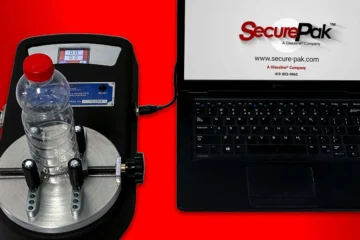
Every cap your line applies has to land just right. Too loose, and the product leaks or spoils before it reaches the shelf. Too tight, and you crack the finish or hand the customer a bottle they cannot open. Torque measurement is what keeps closures in that “just right” zone, turning cap tightness into a quantifiable number your QC team can check, record, and trust.
What Is Torque Measurement?
Torque is rotational force, the twisting effort it takes to turn something around an axis: torque measurement is the process of putting a number to that force. In physics terms, torque equals force multiplied by the distance from the center of rotation, which is why every torque value combines a unit of force with a unit of length.
In packaging, two readings matter most: application torque (the force used to seat the cap during capping) and removal torque (the force a consumer needs to open it).
QC teams measure both to confirm each closure lands inside the target range set for that container and cap.
The Importance of Torque Measurement in Bottling QC
Cap tightness sits at the center of product safety, shelf life, and customer experience. A cap applied with too little force can back off in transit, breaking the seal and exposing the product to leakage, evaporation, or contamination. Too much force creates its own problems: stripped threads, cracked glass finishes, and closures so tight that customers struggle to open them.
Because capping equipment drifts over the course of a shift, tightness is not something you set once and forget. Routine checks throughout a production run expose a capper sliding out of spec before a full batch is affected.
The Units Used in Cap Torque Testing
Torque measures twisting force, so it’s always expressed as a force combined with a distance (like pounds combined with inches).
In North America, cap testing usually uses inch-pounds (in-lb), which works well for the small caps on bottles and jars.
Internationally, the standard unit is newton-meters (N·m), and some equipment also shows kilogram-force meters (kg·m).
These units all convert easily into one another, which is why most modern testers let you switch between them with a button. So if a spec sheet lists newton-meters but your team thinks in inch-pounds, you can just switch the display instead of doing the math by hand (and risking a mistake).
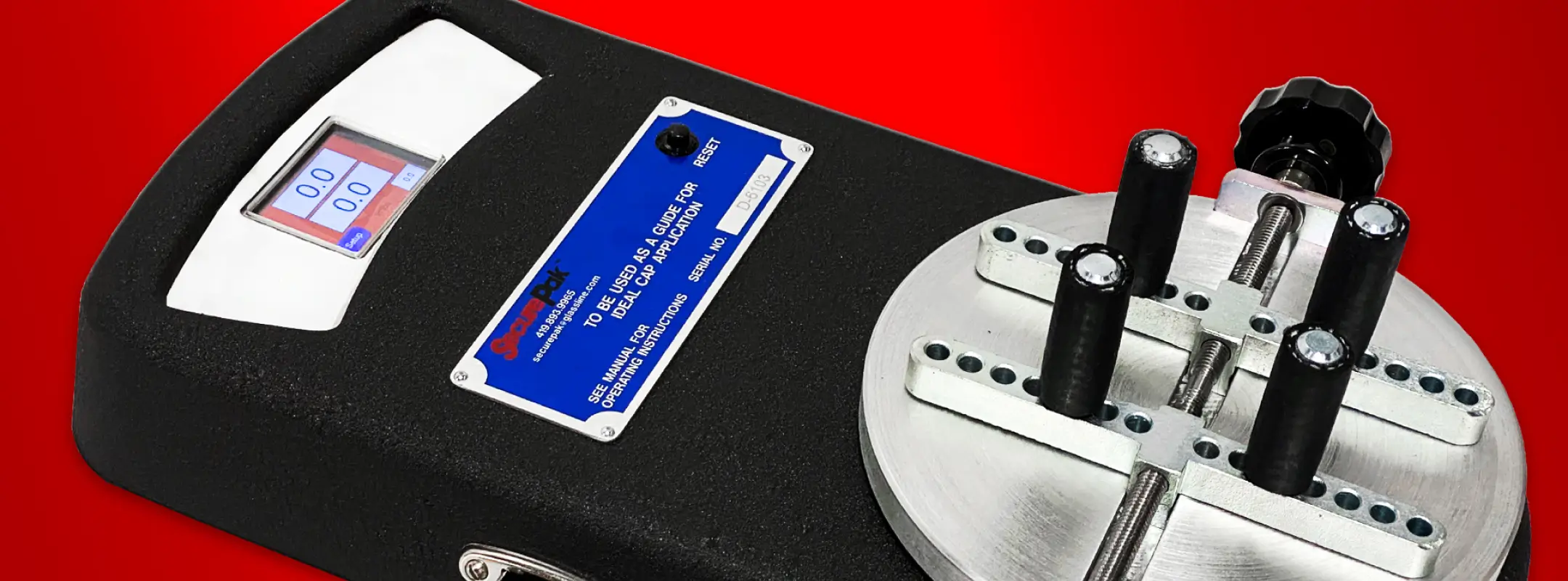
Digital Torque Tester Demonstration
See how easily and accurately our digital torque gauge measures and reads bottle cap tightness.
How Torque Sensors Work
The number on a digital tester’s screen starts as a movement too small to see. Testers of this type rely on a strain gauge transducer: a thin sensing element bonded to a metal component inside the instrument. When a cap is turned, and that force runs through the component, the metal flexes by a fraction no eye could catch. That tiny flex stretches the strain gauge and changes its electrical resistance.
The tester arranges several of these gauges into a balanced circuit called a Wheatstone bridge, which turns the resistance change into a clean electrical signal. The electronics then convert that signal into the torque value on the display. In short, torque measuring with a digital instrument is the act of turning an invisible twist into a precise, repeatable number.
Three Torque Measurement Methods for Bottling
There are three torque measurement methods used in bottling QC, and they differ mainly in how the reading is captured and recorded:
- Manual spring-dial testing is the simplest. A spring-loaded dial registers peak torque as the operator turns the cap, and the value is written down by hand. A spring torque tester is budget-friendly and dependable for routine spot checks.
- Digital electronic transducer testing uses the strain gauge system described above to produce a more refined, higher-resolution reading and to hold the peak value on screen so it can be logged accurately. A benchtop digital torque tester provides quick checks at the line, while a handheld unit such as TorqTraQ applies the same technology in a pocket-size tool.
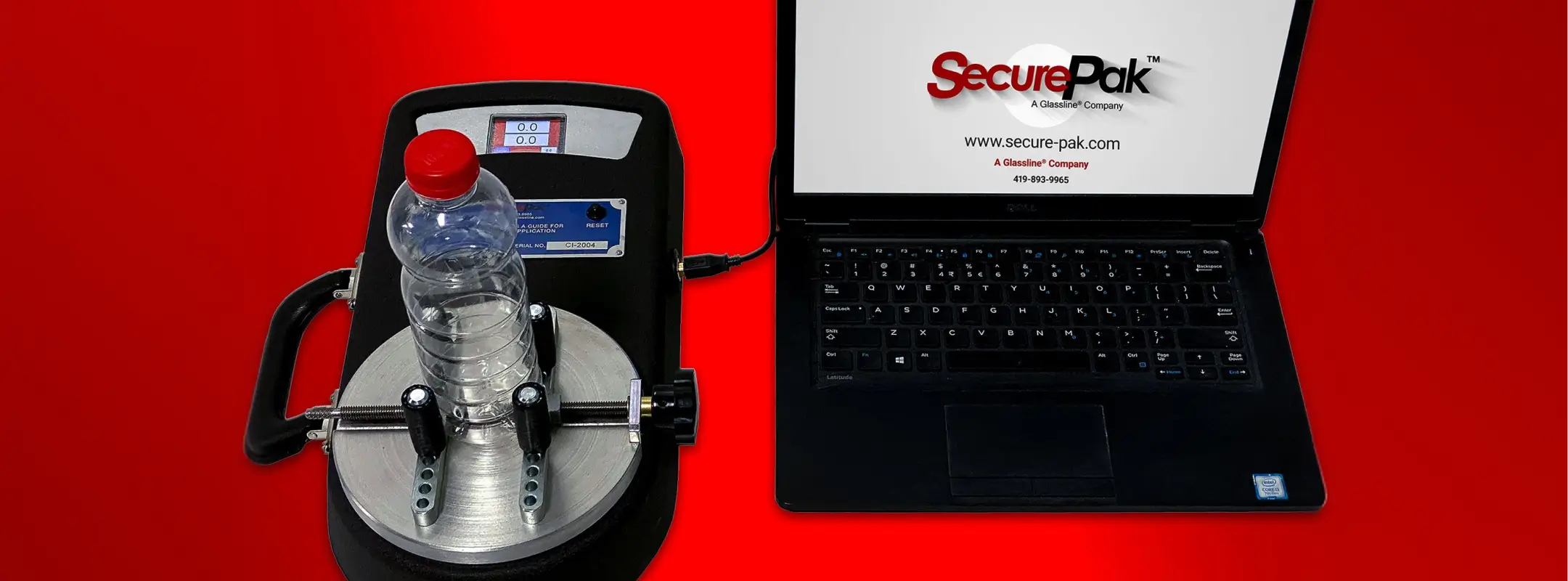
- Computer-interfaced data capture connects the tester to a PC so readings are recorded, stored, and turned into reports automatically. A computer-interface torque tester is the method used in audited or regulated environments.
The right torque measurement for bottle caps depends on your volume, your accuracy needs, and how much record-keeping your QC program requires.
Choosing the Right Approach for Your Line
Most QC programs start by identifying the torque range and unit their closures require, then matching the tester to their volume and documentation needs. A handheld digital unit is well suited to fast checks on the floor, while a benchtop digital tester is the common choice for refined lab readings and can be upgraded to computer-interfaced logging as reporting needs grow.
Torque Measurement FAQs
Why is torque measured in two units at once, like pound-feet or newton-meters, instead of a single unit?
Torque is force multiplied by distance, so a torque unit always names a force and a length together, which is why the names look like two units combined. On top of that, different standards use different systems: US customary specs use inch-pounds or foot-pounds, while international standards use newton-meters. Testers offer selectable units so a spec written one way can be verified without manual conversion.
How accurate does torque measurement need to be for FDA or USP compliance in pharmaceutical bottling?
There is no single torque value or accuracy percentage that FDA or USP mandates across the board. Regulators expect a documented, repeatable process: torque targets set from your closure and container specifications, a tester with calibration traceable to a recognized standard such as NIST, and records that show the process stayed in control. In practice, cap torque testers commonly offer full-scale accuracy in the range of roughly ±0.5% to ±1%, which is well within what most closure specs require. Always confirm your specific targets against your product’s validated specification.
What is the difference between static and dynamic torque measurement, and which applies to bottle caps?
Static torque, also called reaction torque, is measured when there is little or no continuous rotation, such as turning a cap less than a full revolution to seat it or break it loose. Dynamic torque, also called rotary torque, is measured on parts that spin continuously, like a driveshaft or motor. Bottle cap testing is a static measurement: you capture the peak force needed to apply or remove the closure, not a continuously rotating load. That’s why benchtop cap torque testers focus on peak application and removal readings.
Find Your Bottle Cap Torque Tester at SecurePak
Compare SecurePak’s bottle cap torque testers to find the one that best suits your business. Contact our team to talk through the right fit for your closures.